The blog
How Does Virtual Try-On Work? AI Fitting Rooms Explained
The tech behind virtual fitting rooms — how AI maps your body and renders clothes on you — plus honest limits, 6 tips for best results, and how our Try Your Outfit feature works.
September 27, 2026
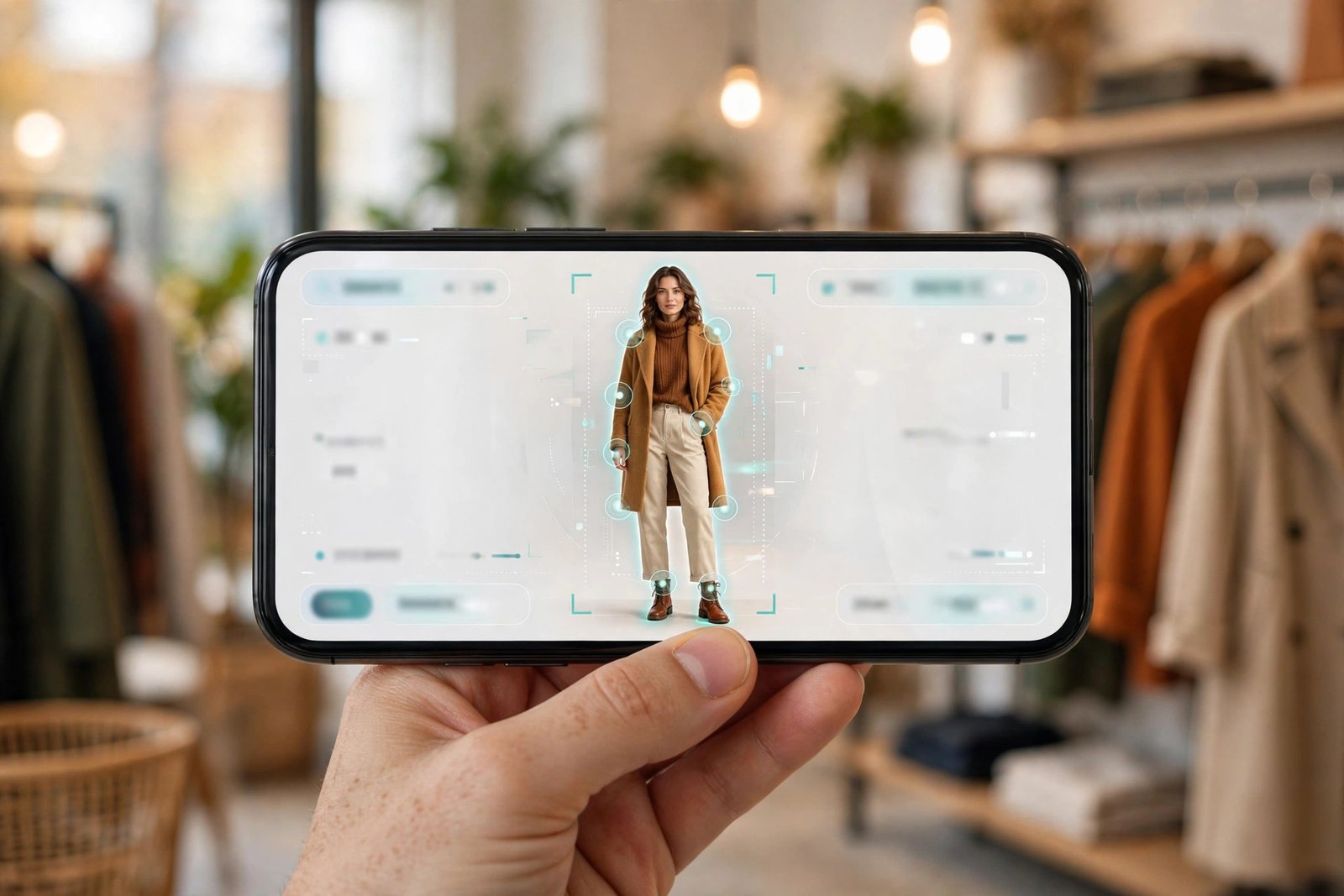
Here's a number that explains everything about online clothes shopping: 65% of online shoppers say they've returned an item because it didn't fit — more than any other reason. Apparel return rates run 20–40%, and poor fit drives roughly 53% of apparel returns (Your Retail Coach, June 2026). Virtual try-on is the technology built to answer the fit question *before* you check out. Here's how it actually works, what it can and can't do, and how to get the best results from it.
What Is Virtual Try-On?
Virtual try-on is technology that uses computer vision and generative AI to show how a garment would look on your body from a photo — a digital fitting room.
There are two flavors. AR overlay uses your live camera to superimpose the item on you in real time — like Warby Parker's glasses try-on or Sephora's Virtual Artist. AI photo generation is the newer wave: you upload a photo, and the AI renders a realistic image of you wearing the garment — like Google's try-on tool or Walmart's “Be Your Own Model,” which spans 270,000+ items.
How Virtual Try-On Technology Actually Works
Step 1 — You Provide the Input
It starts with you. You upload a full-length photo (facing the camera works best) or enable your live camera. The quality of this input matters more than most people realize — good lighting and a clear, straight-on frame give the AI the most to work with.
Step 2 — Computer Vision Maps Your Body
The system identifies your joints, contours, and body landmarks to build what's called a “clothing-agnostic” digital model of you — it understands your shape independent of what you're currently wearing. Think of it as the AI learning your proportions: shoulder width, torso length, where your waist sits.
Step 3 — The AI Dresses the Digital You
This is where the magic happens. Modern systems use diffusion models — the same family of AI behind today's image generators — which replaced the older GAN “warp” pipelines that tended to look stiff and pasted-on. These models are trained on how real garments drape, stretch, and fold on different body shapes. As Google's fashion image model team puts it, the AI “understands the human body and nuances of clothing, like how different materials fold, stretch and drape.”
The result preserves your pose, handles occlusion (arms crossed over your torso), and keeps logos and patterns intact — the details that sell realism.
Step 4 — You See the Result
Seconds later, you see a realistic image — sometimes video — of you wearing the item. Google's tool lets you save favorites, revisit past try-ons, and share them with friends for a second opinion. Shoppers try an average of 4 models per product when the option exists.
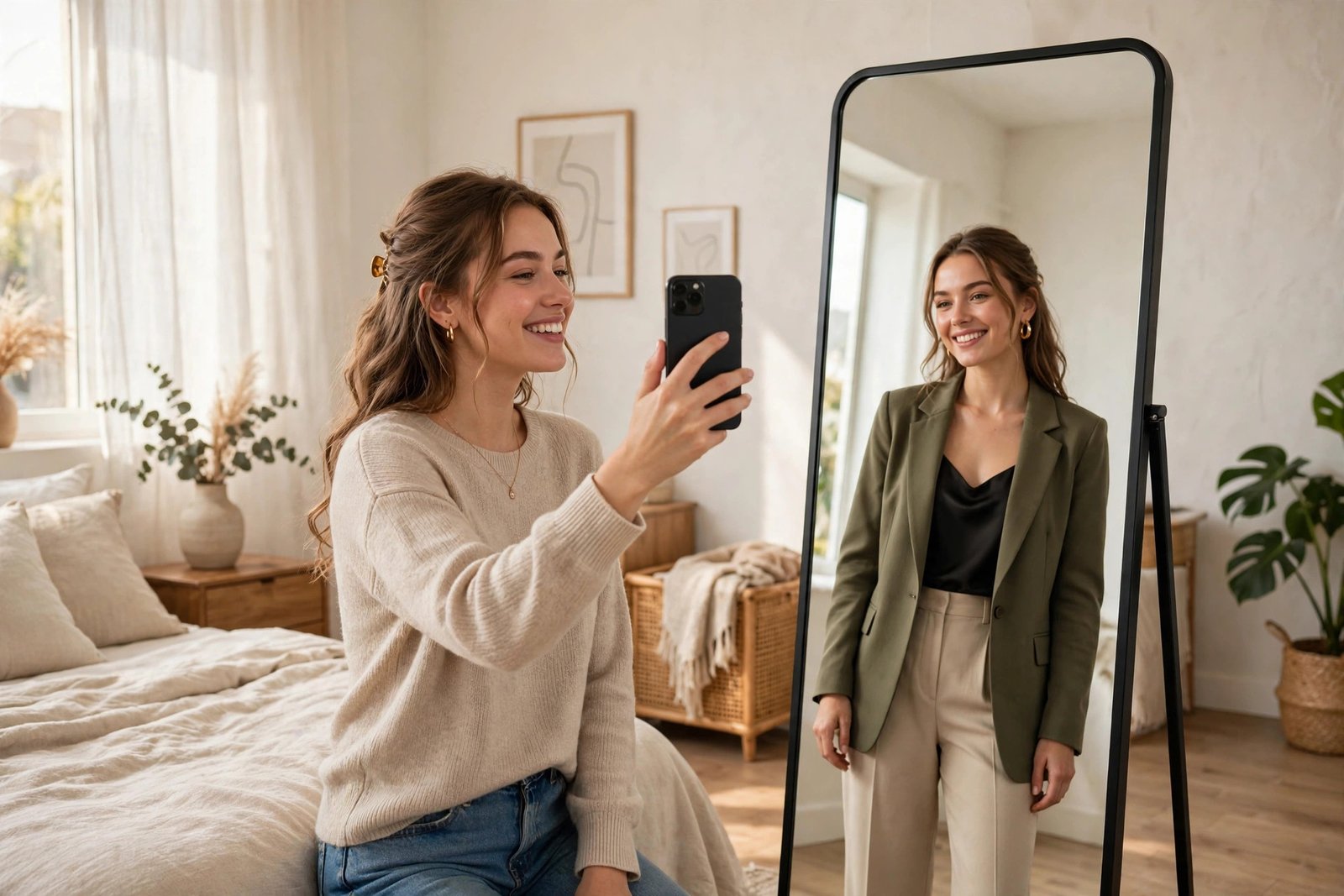
How to Use a Virtual Try-On Feature: 5 Steps
- Look for the “try it on” button on an eligible product page — Google now surfaces try-on across Search, Shopping, and Images.
- Upload a full-length photo or turn on your camera.
- Wait a few moments for the AI render — ASOS's AI-powered tool returns results in 4–7 seconds.
- Compare across colors, sizes, and models before deciding.
- Save your favorites and buy when you're confident.
Why Shoppers and Stores Love It
The appeal is straightforward: fit confidence before checkout. Google reports that try-on images get 60% more high-quality views, and shoppers who use them are more likely to visit the brand's site. DRESSX's study of 1.2 million shoppers found try-on users 50% more likely to purchase and viewing 7× more products — though that's a vendor-published study, so treat it as directional, not gospel.
On returns, vendors claim reductions of 20–30% — again, vendor-sourced. And 40% of consumers say they prefer sites that offer virtual try-on. There's a sustainability angle too: fewer returns means less reverse-logistics waste.
Honest Limitations — What Virtual Try-On Can't Do
This is the part most guides skip, and it's the most important. Virtual try-on is a simulation, not a physical measurement. It estimates how a garment would *likely look* — it doesn't measure how actual fabric interacts with your actual body.
It's good at showing style, color, and silhouette on your shape. It does not guarantee comfort, snugness, or fabric feel. As one practitioner put it: “a virtual try-on result is not a fit prediction.”
Here's the honesty anchor worth knowing: ASOS's own tool “is designed to give general guidance and shoppers still need to consult size guides.” And ASOS's documented 150-basis-point return-rate improvement in FY2025 came from size guides, customer reviews, and return fees — not from virtual try-on. The takeaway: use try-on for *“do I like this look on me?”* and the size guide for *“will it fit?”*
Two more honest notes. Accuracy varies with photo quality and the tech behind the tool — body-scan and garment-model discrepancies are a documented source of dissatisfaction. And friction is real: wardrobe-app Aesty found 73–86% of started try-ons were abandoned before completion in May–July 2026. Finally, privacy: photo and body data concerns are shoppers' top worry with this tech — check a retailer's privacy policy before uploading.
6 Tips for the Best Virtual Try-On Results
- Go full-length, phone at chest height — not high, not low — to preserve your torso proportions.
- Use even, indirect light. Avoid mixed lighting and hard shadows.
- Wear fitted, neutral clothing. Pull long hair off your shoulders; keep arms slightly away from your torso.
- Start straight-on. Add a profile view if the tool supports it.
- Re-take when things change — posture, body shape, or hairstyle shifts all affect the render.
- Always cross-check against real product photos and the size guide. The preview shows the look; the size guide shows the fit.
Try It Yourself: Try Your Outfit on Products in Trends
Our Try Your Outfit feature is the virtual fitting room built into the store. Pick a top, a bottom, a jacket — one piece per category — and watch one model wear your entire look at once (dresses cover both top and bottom, just like real life).
Every piece also shows a real person wearing the exact item: the model preview is AI-generated from the real product photos so you can play, but the real photo is what you're actually buying. Your look auto-saves as you build, so the back button never clears your outfit — and when it's right, add the whole look to your cart in one tap.
Shop the collection and build your look →
Virtual Try-On vs. Size Charts vs. Reviews
Shoppers actually have three fit tools. Each answers a different question — the smart move is using them together:
| Tool | Answers | Strength | Weakness |
|---|---|---|---|
| Virtual try-on | “Do I like this look on me?” | Visual: style, color, silhouette on your shape | Can't feel fabric or confirm measurements |
| Size chart | “Will it fit my body?” | Hard numbers: waist, hip, inseam | No visual; assumes standard proportions |
| Customer reviews | “How does it fit real people?” | Real fit notes: runs big, stretches out, etc. | Inconsistent; reviewers' bodies differ from yours |
The winning combo: try-on for the look, size chart for the numbers, reviews for the quirks. No single tool replaces the other two.
What's Next for Virtual Try-On
The technology is moving fast. Video try-on — seeing the garment move as you move — is already emerging, and fit-prediction models that estimate actual measurements (not just appearance) are in active development. The honest caveat from this article still applies: until those arrive, treat today's tools as style previews, not tape measures.
Virtual Try-On FAQs
What is virtual try-on?
Technology that uses computer vision and generative AI to show you how a garment would look on your body from a photo — a digital fitting room.
How does virtual try-on work?
You upload a photo, AI maps your body's landmarks, a generative model renders the garment onto you with realistic drape and lighting, and you see the preview in seconds.
Is virtual try-on accurate?
It's good for judging style, color, and general silhouette on your shape — but it's not a precise fit guarantee. Always check the size guide too.
Does virtual try-on reduce returns?
Vendors report 20–30% reductions, but those are vendor-published numbers, not independent studies. The best-documented apparel return improvement (ASOS, FY2025) came from size guides and reviews, not try-on. Promising, but unproven universally.
Do I need to download an app to use virtual try-on?
Often no — many tools run in the browser or inside shopping surfaces. Google's works across Search and Shopping with no install, and no-install options are considered best practice.
What's the difference between AR try-on and AI try-on?
AR try-on overlays the item on your live camera view in real time; AI try-on generates a new photo of you wearing the item.
Is my photo kept private?
It depends on the retailer — check their privacy policy before uploading. Body-data privacy is shoppers' top concern with this technology.
Can virtual try-on tell me my exact size?
No — it shows appearance, not measurements. Use it for “do I like this look on me” and the size guide for “will it fit.”
Once your look is built, finish it with the Peel-Off Lip Liner Stain — waterproof, all-day color that completes any outfit. Back to Products in Trends →